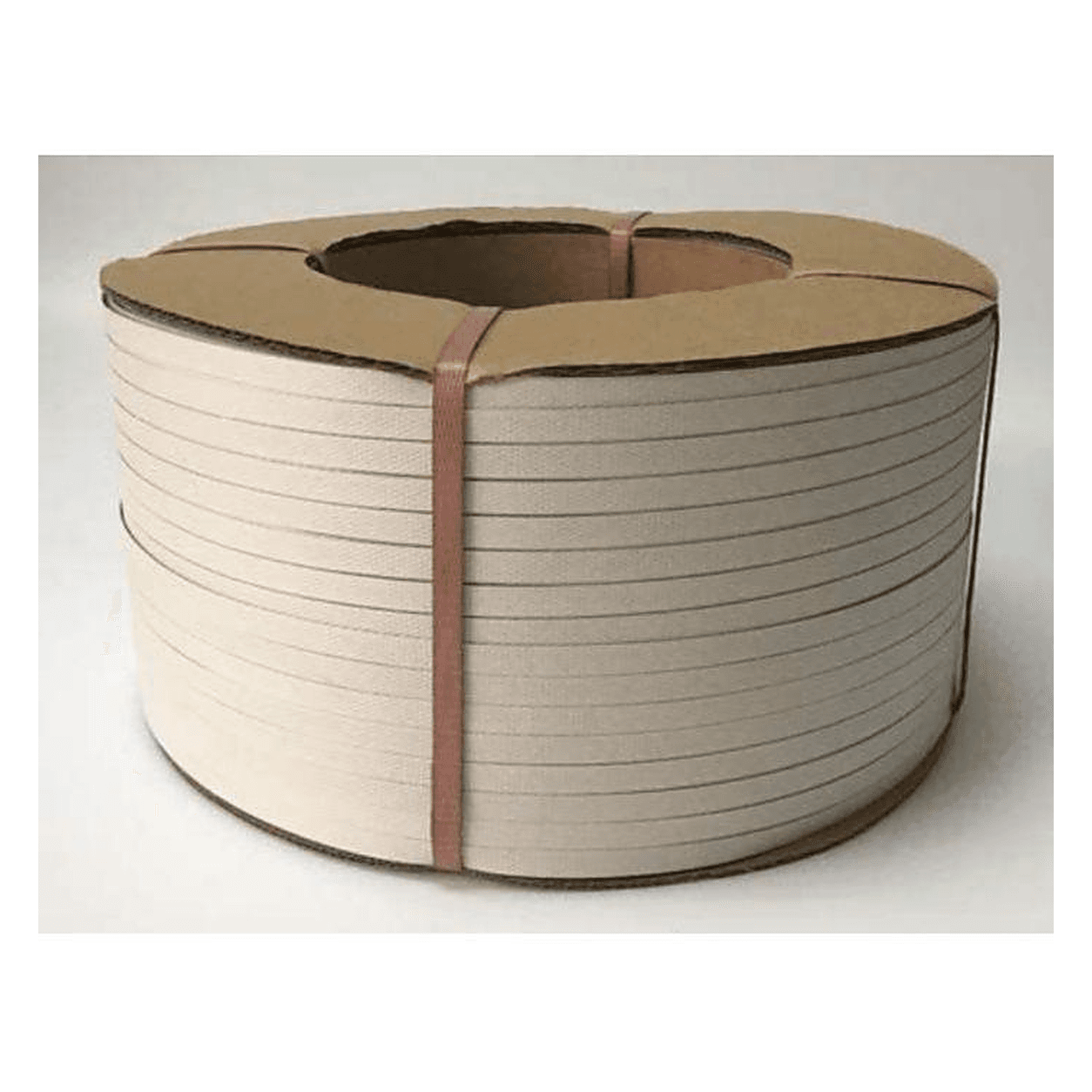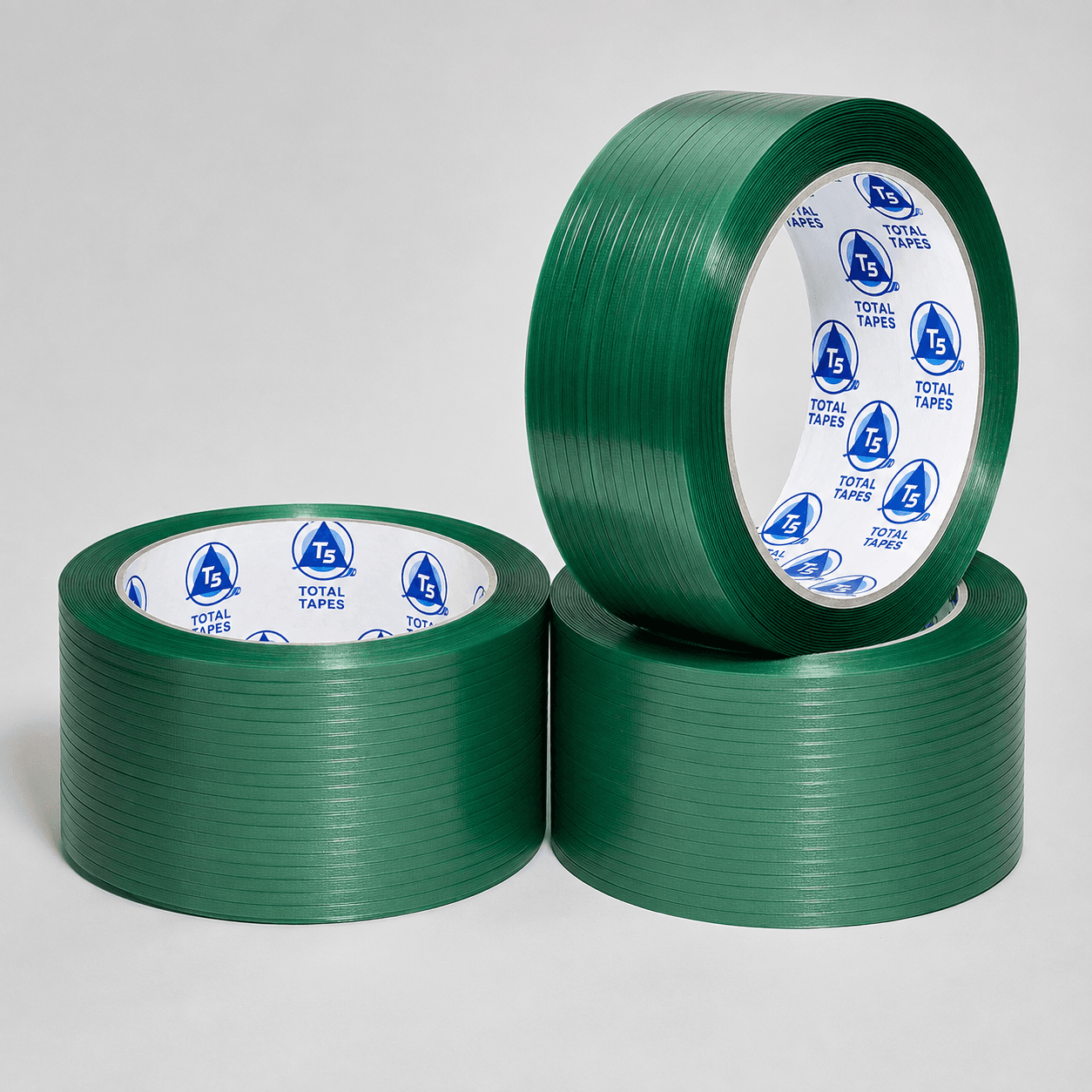
PP strap costs less per metre than PET. That is where most comparisons start and, unhelpfully, where many of them stop. The right question is not which strap is cheaper, but which strap is still doing its job when the pallet reaches the other end.
What each one is
| PP Box Strap | PET Box Strap | |
|---|---|---|
| Material | Polypropylene | Polyester |
| Width | 9, 12, 15, 19 mm | 12, 15, 16, 19, 25 mm |
| Thickness | 0.4 – 0.8 mm | 0.5 – 1.0 mm |
| Roll weight | 2 kg, 4 kg | 10 kg, 20 kg |
| Tensile strength | Medium to high | Very high |
| Best at | Light bundling, short transit | Heavy loads, long transit |
The property that actually decides it: retained tension
Both straps are tensioned around a load. The difference is what happens over the next few days. PP has high elongation and relatively poor recovery — it stretches under tension and does not fully pull back, so tension bleeds off. PET stretches far less and holds what it is given.
This matters because loads settle. Cartons compress, contents shift, a pallet of bagged goods slumps slightly in the first hours. A PET strap takes up that movement and stays tight. A PP strap on the same load can be visibly slack by the second day — and a slack strap is not restraining anything, it is just decoration.
Where PP is the correct choice
- Bundling cartons, newspapers, boxes of printed material
- Securing light loads that will be opened within a day or two
- Anything moving within the city, where transit is hours rather than days
- Hand strapping where a lighter 2 kg or 4 kg roll is easier to work with
Where PET earns the extra cost
- Heavy palletised loads — bricks, tiles, metal, drums
- Long-distance road transit, where vibration works at every joint
- Loads that settle, compress or are stacked under other pallets
- Anywhere steel strap was previously used — PET replaces it without rusting or cutting hands
The false economy, stated plainly
If a pallet arrives with a snapped strap, the strapping cost is irrelevant next to the damaged goods, the re-handling and the claim. On heavy or long-haul loads, buying PP to save on strap is the most expensive decision available. On a bundle of cartons going across town, buying PET is just spending money for no gain.
A quick rule
If the load is heavy, if it will settle, or if it is on a truck overnight, use PET. If it is light and short-haul, PP is the right tool and the cheaper one. If you are unsure, tell us the load weight and the route.
Ask on WhatsApp →